Case studies
Chesterton Indoor Bowls Club, Cambridge — from a manual scoreboard to a system that pays for itself
“We used to have a very old scoreboard. Now we've got a fantastic new system with a laptop. We just type the names in, scores are instantly on the board.”Kevin Kent, CEO, Chesterton Indoor…
“We used to have a very old scoreboard. Now we’ve got a fantastic new system with a laptop. We just type the names in, scores are instantly on the board.”
Kevin Kent, CEO, Chesterton Indoor Bowls Club
“We have individual televisions now where people can remotely put scores into the system, which is much quicker, much better all around.”
Kevin Kent, CEO, Chesterton Indoor Bowls Club
“Now we’ve got the option to run on the main screen or totaliser, the advertising brings in more revenue for us, so partly pays for the scoreboard, which is great.”
Kevin Kent, CEO, Chesterton Indoor Bowls Club
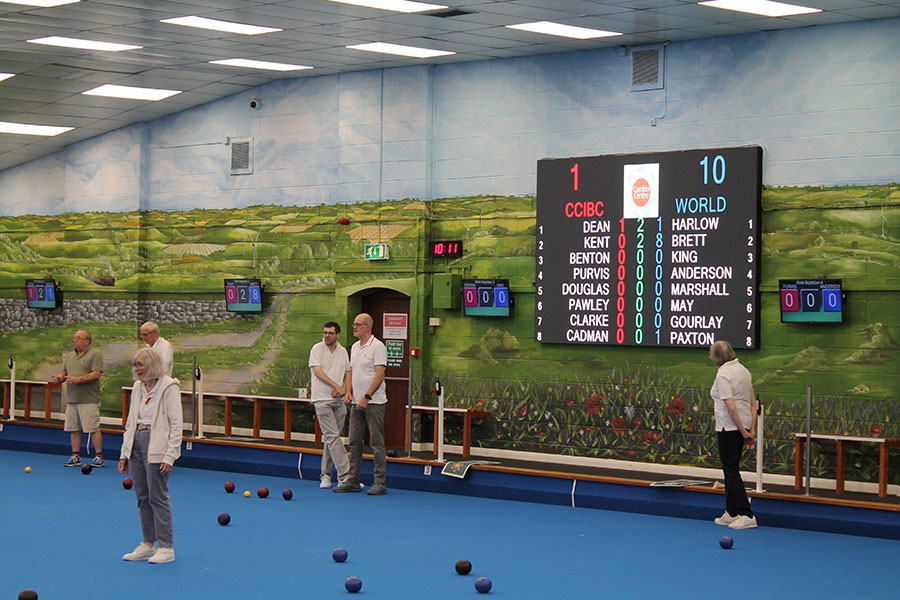
Durant Video Screens installed a Totaliser and Rink-End Bowls System at Chesterton Indoor Bowls Club in Cambridge, replacing an ageing manual scoreboard. The installation took two weeks and covers a 3m x 2m master scoreboard and eight 32-inch individual rink screens.
What they had before
The club’s previous scoreboard was manual, and updating it took real time. Every change meant somebody physically altering the board.
On a league night with eight rinks in play, that is a job nobody wants and a score that is always slightly behind the game. It also meant the board could do nothing else — no advertising, no club information, no revenue.
How it works now
Scores are now entered on a laptop. Names are typed in and appear on the board immediately, and each rink has its own 32-inch screen where scores can be entered remotely from the rink itself.
That is the change that matters day to day: the people playing enter the score where they are playing, and it appears everywhere at once. Nobody walks anywhere, and the board is never out of date.
A board that pays for itself
The master scoreboard runs advertising as well as scoring, and that has changed the economics of the installation.
A bowls hall holds an audience for hours at a time across several days a week. Selling that space to local businesses gives the club an income stream it did not have when the board was manual — and one that offsets the cost of the system itself.
Fifty years, and a modernisation
The scoreboard was one part of a wider modernisation. Chesterton was established in 1973 and marked its 50th anniversary by reinvesting in the building — updated rinks, restaurant and toilets alongside the new scoring infrastructure.
The funding came from an unusual source: money the club generated when the NHS used the venue during the pandemic. It is a good example of a club turning a difficult period into a facility that will serve its members for the next fifty years.
Also worth a look
Our other bowls installation, at West Denton Indoor Bowls Club in Newcastle, took the same approach a step further with a 4m x 2m totaliser and an eight-speaker PA system throughout the hall.
Where else we have installed
Every installation we have completed is plotted on our map. Tick Electronic Scoreboards to see the rest: installations.durantcricket.co.uk
Project images
Project gallery
Chesterton Indoor Bowls Club, Cambridge — from a manual scoreboard to a system that pays for itself